Your ROAS does not pay the bills.
The ad account can look fantastic while the company has less money left. I want to start at the other end: what can a new customer actually cost?
I want to start with P&L and the forecast. Before discussing the next campaign, we need to know how the business fits together. What remains after the product, discount, shipping, payment and return have taken their share? That sets the conditions for customer acquisition.
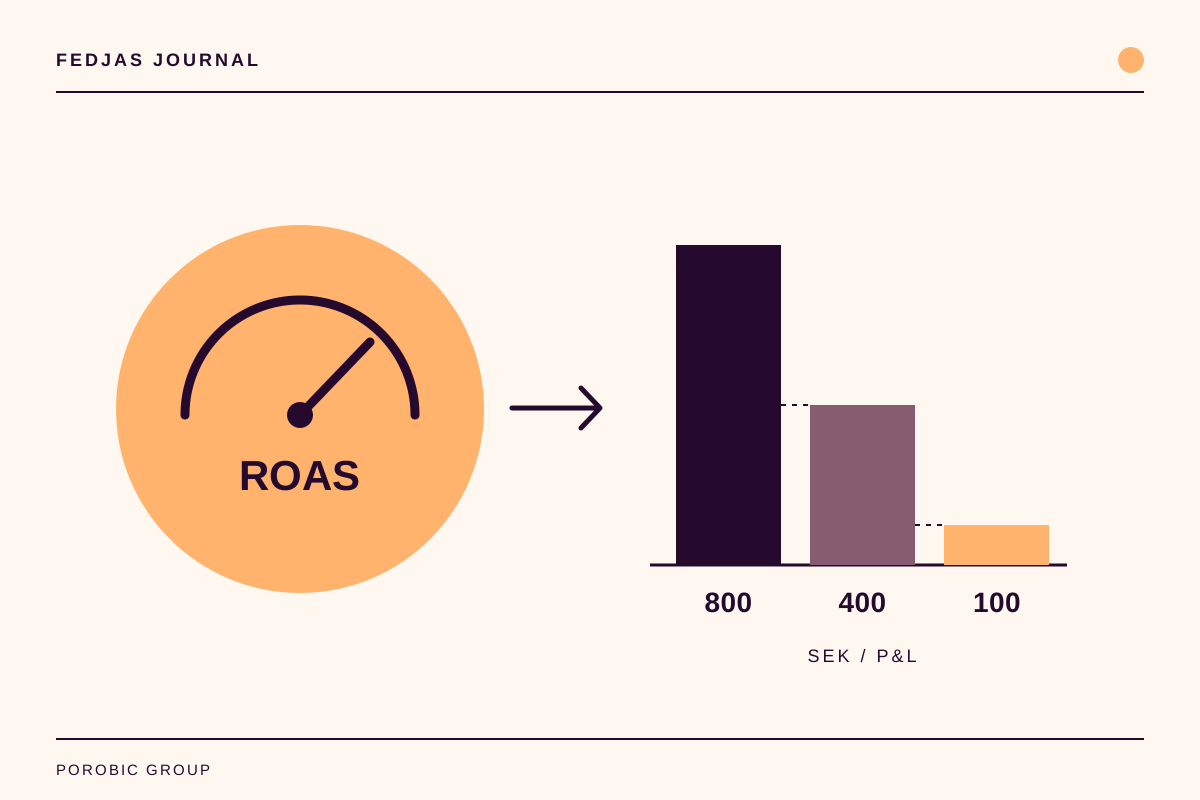
Take an entirely hypothetical example. An order produces SEK 800 in net revenue excluding VAT. Product cost is SEK 250, shipping and handling 80, payment and other variable costs 40, and an estimated return cost 30. That leaves SEK 400 before marketing. Acquire the customer for SEK 300 and you have SEK 100 left before fixed costs. That is a much more useful discussion than how green a box is in Ads Manager.
The example is simplified. Some costs arise per order, others per customer or period. Record what your calculation includes and keep the definitions consistent. If CAC means media cost only, say so. Creative production and other acquisition costs also need a place in the company’s financial plan.
Then comes repurchase. I like products that people naturally want to buy again. But future purchases need support from real customer groups and actual capacity to fund the wait. An optimistic LTV in a spreadsheet is little help if cash runs out before the customer returns.
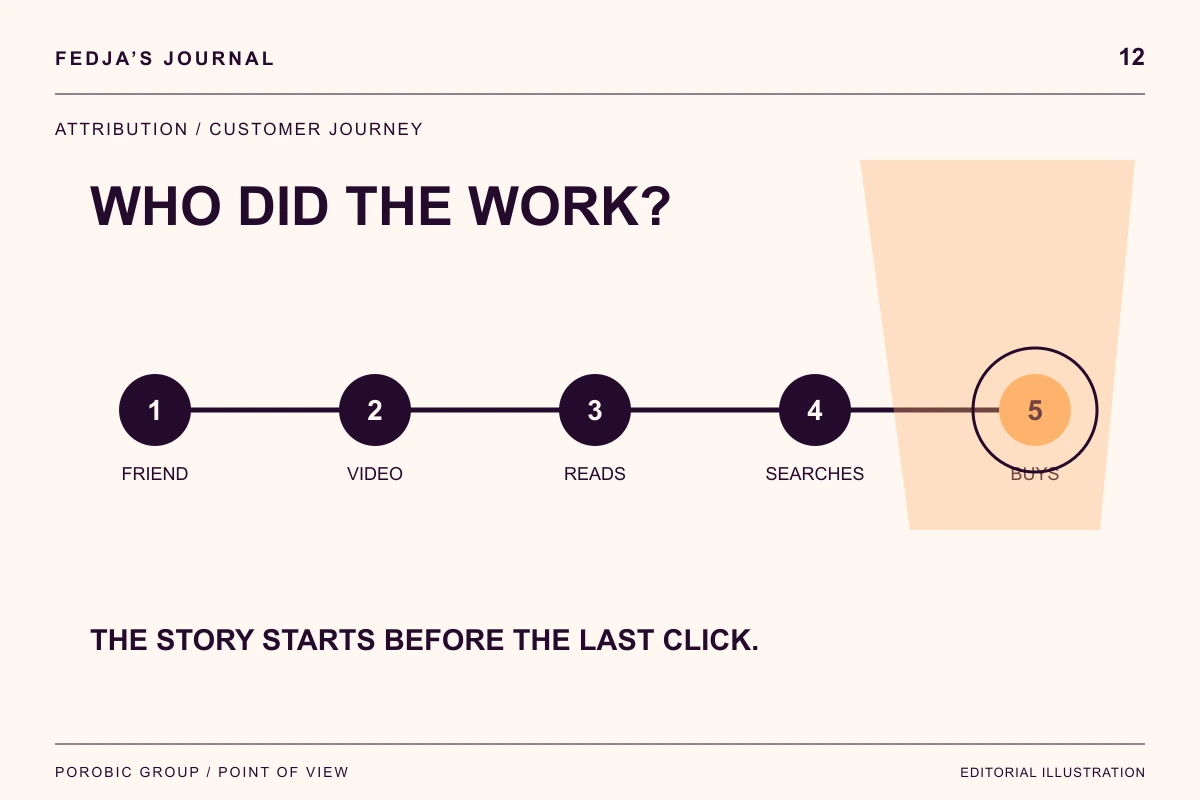
Attribution needs scrutiny too. A platform can claim a sale without showing how much additional business the ad generated. Google describes incrementality tests as one way to investigate that difference. A suitable setup depends on volume, budget and the question the company needs to answer.
I start by calculating how much we can spend on acquisition and putting it in the forecast. Creative then needs an assignment that can influence the customer’s decision. After the test, we follow what the purchases left behind and update the plan. I will not let a green box have the final word on the company’s economics.
Creative therefore gets a clear commercial assignment. Which objection should the ad resolve? Which product should take priority? Which customer do we want to reach, and what margin sits behind the sale? I want answers before we start celebrating a percentage.

Fedja Porobic
Founder of Porobic Group. I write about advertising, ecommerce and the decisions that determine whether a business makes money.
Meet the Porobic Group team