The customer was not at our last ten marketing meetings.
We have stared at the ad for weeks. The customer may have seen it just as the bus arrived.
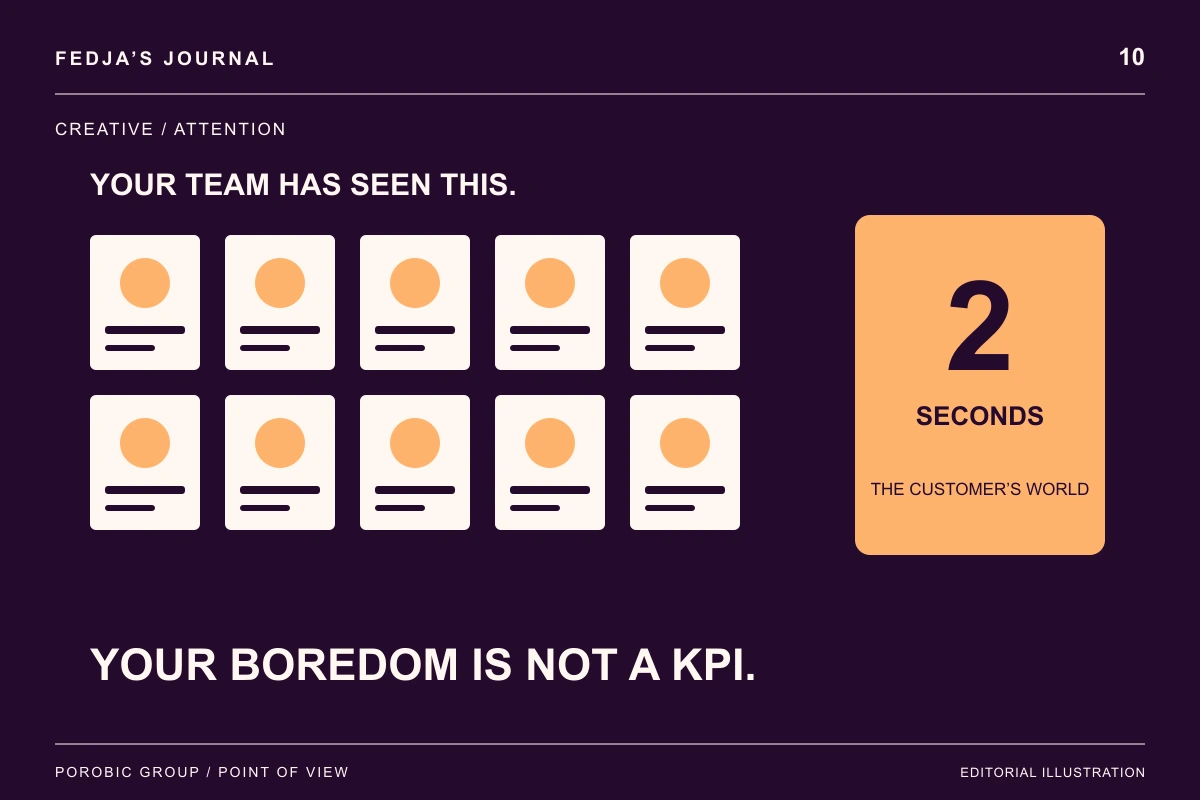
We have discussed every word of the ad and seen every version that never ran. The customer may have caught two seconds of it before the bus arrived. Those are two very different doses of the same message. I want that perspective in the room when we start calling our own boredom creative fatigue.
We watched the whole series. The customer saw a trailer.
We know how many versions sit behind the finished ad. We remember the positioning review and why the headline ended up that way. After a while, every part feels obvious. It is easy to want something new before the message has had a proper chance.
The customer starts somewhere else. She needs to understand what the product is, whether it suits her and why she should choose it. She feels no duty to follow our creative development. If we change direction to make our own working week more entertaining, we should at least be honest about what we are doing.
Start with the change you can observe.
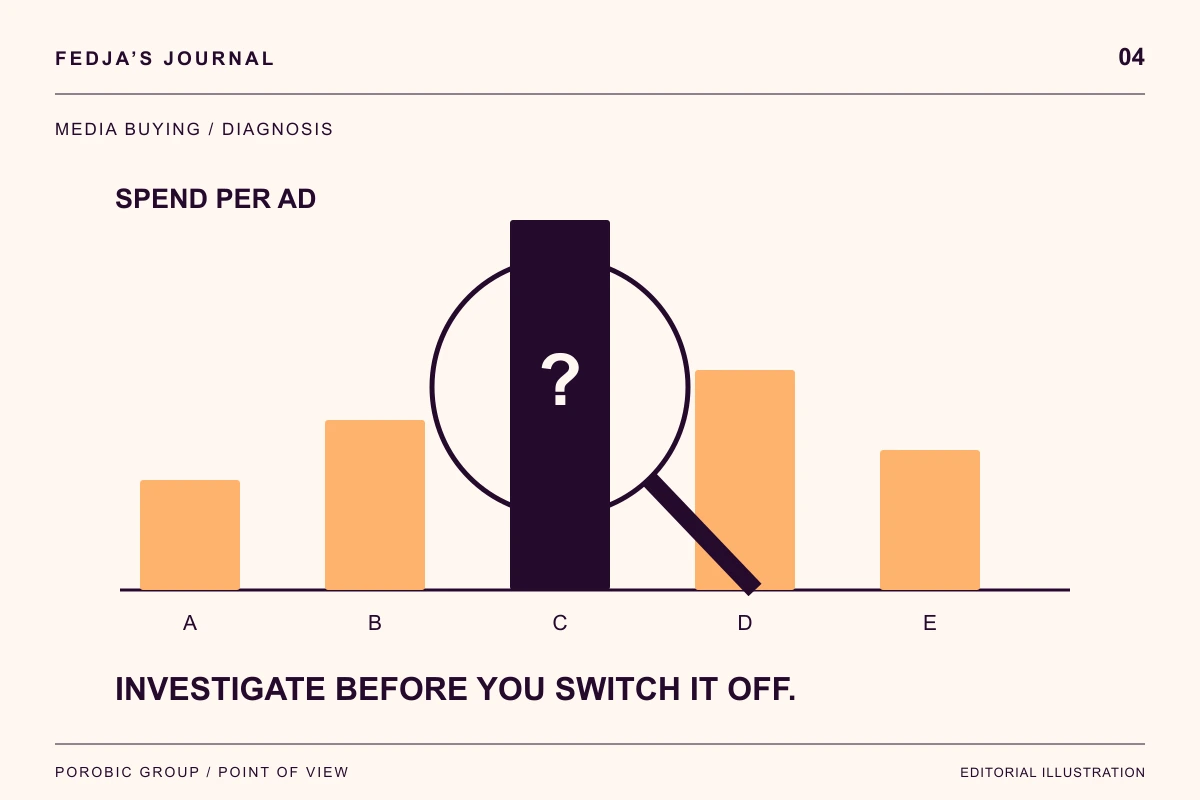
Creative fatigue is one possible explanation when a piece of material starts getting a weaker response. A bad Tuesday is no diagnosis. Sales and ad performance can also be affected by demand, stock, price, competition or something that changed in the purchase experience.
Write down what actually happened. Are fewer people responding to the message? Has the cost per click changed? What happens after the click? Look at the pattern over a reasonable period and check what else changed. We need to understand the problem before the whole team starts treating it with new ads.
Follow attention all the way through to the purchase.
A new hook can make more people stop without helping the right people buy. An older ad may get a smaller audience to react while still bringing relevant customers. I therefore want to see how the creative response connects to acquisition and the economics of the business.
Decide what job the material should do. If it should help new people understand the product, we need to assess that contribution. And if we change the discount, audience and product page at once, we need to be honest about how little the comparison can tell us about the ad itself.
Show the ad to someone who missed the meeting.
Show the material to someone who was not in the meeting. Ask her to describe what she thinks it is about and listen before explaining what we really meant. Try to keep your hands away from presentation mode for two minutes. That is when the interesting misunderstandings can surface.
Ask what the product seems to be and what she does not understand. Then follow the same route after the ad. Write down the words she uses. The next creative may be there, long before we need an internal discussion about elevating the message.
Give the next idea a reason to exist.
There are plenty of good reasons to develop something new. Another customer objection needs answering. Showing the product in use could make it easier to understand. A new format might suit the situation better. Those reasons give the creator a more useful assignment than simply making something fresh.
Write down which question the next idea should test. A different opening with the same product explanation is a different test from an entirely new concept for another buying situation. Choose something you actually have the budget and volume to assess. Five half-baked tests hardly give us more knowledge because they start together.
Give a good message time to do its job.
I want the team to keep developing material even when something works. But we need to distinguish the ambition to make something new from the observation that the old material has stopped working. Otherwise it gets hard to tell whether we need to solve a sales problem or book another ideas session.
Save what you tested, what you saw and which decision you made. Then the next meeting need not start with the most bored person in the room deciding that everything needs redoing. The customer still has not attended those ten meetings. Give her a chance to understand before we run off to the next big idea.

Fedja Porobic
Founder of Porobic Group. I write about advertising, ecommerce and the decisions that determine whether a business makes money.
Meet the Porobic Group team