Pause the ad if you like. Understand what you are switching off first.
Sorting by ROAS and pausing the red rows is easy. Understanding what the account actually needs is the job.
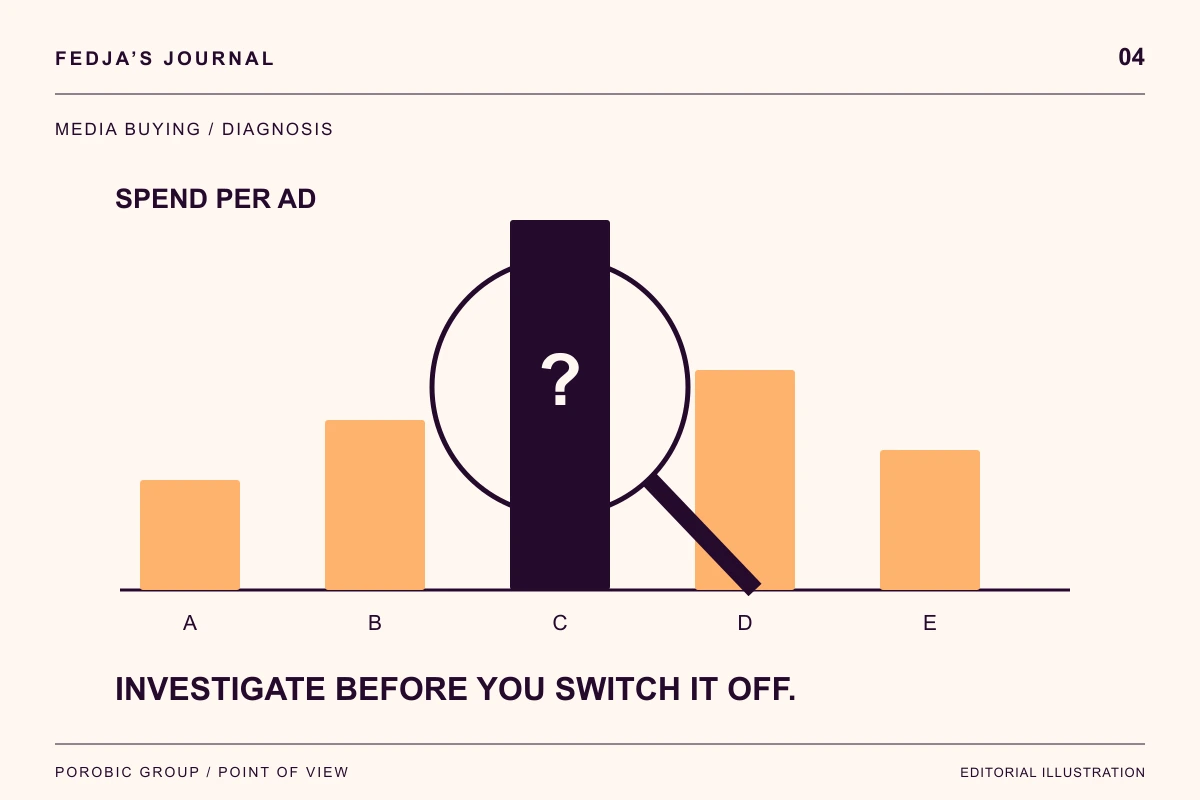
An ad gets the most money and has worse reported ROAS than the others. One click on pause and we can call it optimisation. First I want to know what we expect to improve when the ad disappears. It may be bad. It may also contribute to purchases that show up elsewhere in the report. That needs investigating before a sort in Ads Manager gets to pass for analysis.
One click on pause is not much of an analysis
An ad receives a large share of the budget and has lower reported ROAS than some others in the same ad set. That is the observation. Concluding that it therefore wastes money takes more work than clicking a column header.
First I want to know which period we are looking at, how purchases and costs are distributed and what other differences exist between the ads. A small ad and a large ad need not face the same conditions. Anyone wanting to move the money can start by explaining what the comparison tells us.
The customer rarely follows our favourite column
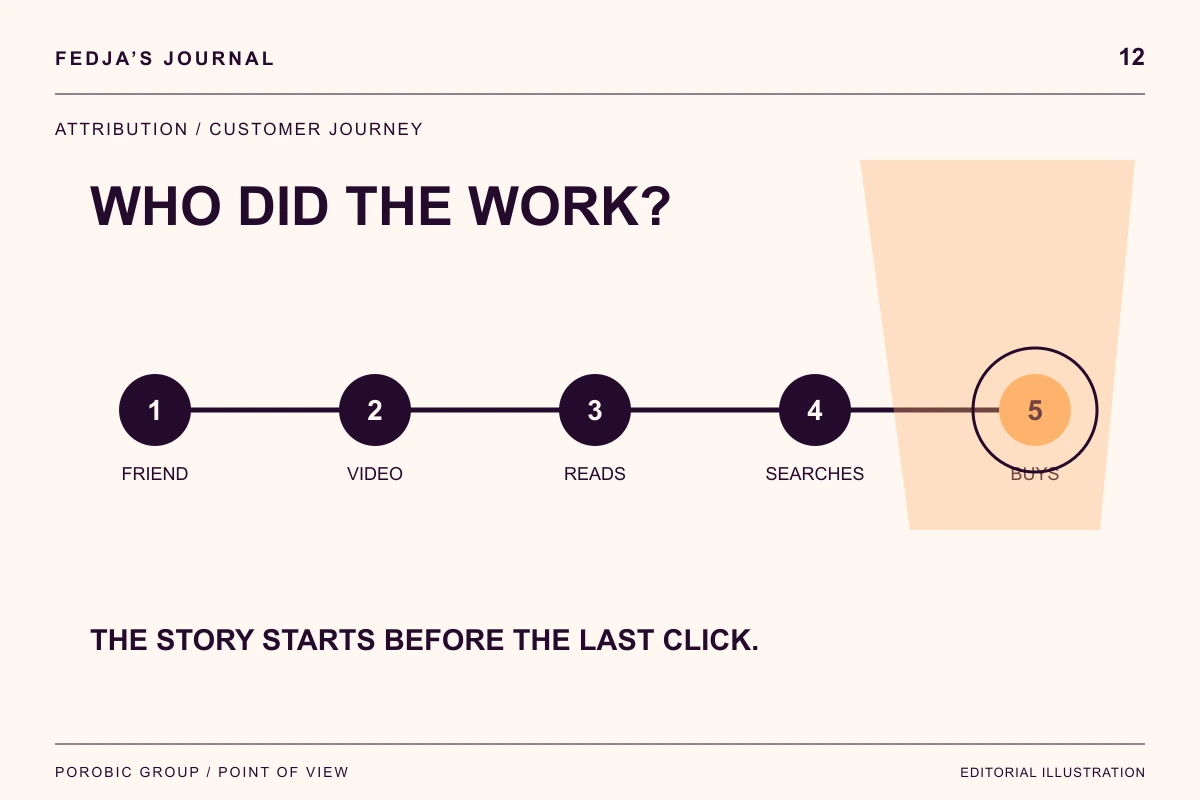
One possible hypothesis is that an ad introduces the brand and contributes to a later action that gets more of the visible credit. A video might spark interest, while another message meets the customer closer to a purchase. It would be convenient if the entire journey always appeared on the same row.
Based on that hypothesis, I want to investigate what happens when we change the mix. Which message disappears? Which customers was it intended to reach? Do we still have material that explains the product and gives people a reason to care? Those are questions about the marketing itself, before the discussion about the next click of a button.
There is a limit to what spend can prove
High spend shows that Meta allocated a lot of money to the ad under the conditions in question. It proves neither that the platform knows best nor that the ad creates incremental sales: purchases that would not otherwise have happened. The hypothesis about an earlier contact in the journey can be wrong too. The ad may simply be bad.
The ad account therefore needs to meet the store’s actual sales and their economics. What remained after product cost, shipping, discount and other relevant costs? If the report improves while the business gets worse, I will not celebrate the report. Meta’s invoice is coming anyway.
Write the hypothesis before pressing pause
Say we believe a video helps new people understand the product, and that sales could suffer if we remove it. Write down what would support and weaken that belief. Then choose how to follow up the decision. Once the result is in, it is too late to pretend we designed the test in advance.
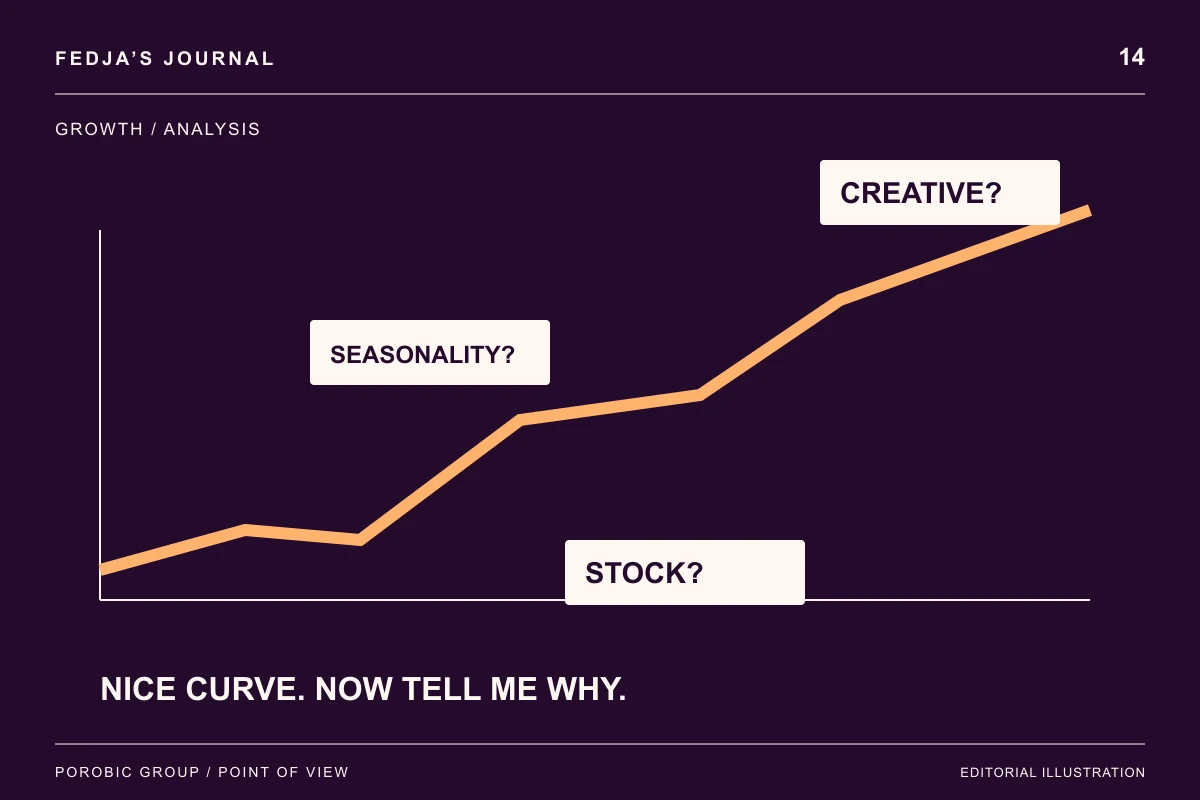
If a controlled test with comparable groups is feasible, it provides a clearer way to investigate the effect. A simple before-and-after comparison is more sensitive to other things changing at the same time. Campaigns, stock, price and season can otherwise get swept into the conclusion.
Make a change you can learn something from
Sometimes the budget needs a decision before we have every answer. That is reality. Record what you do, why you do it and what would make you change your mind. Changing the entire account at once gives us a great deal of activity and very little chance of understanding what helped.
Decide when to follow up and which business outcome to assess. Sometimes the result cannot be interpreted. Then say so. Pretending we know what the last decision achieved hardly makes the next one better.
An AI agent can automate a bad rule too
An AI agent should not get a simpler rule just because it presses buttons faster. Pause everything with low ROAS is a crude instruction. Keep everything with high spend is another. Both can make a questionable assumption very efficient.
I want to be able to examine why a change is proposed and how the business will be followed up. The same requirement applies to me and other people with a finger on the pause button. Being quick to decide is one thing. Understanding what the decision did is part of the job too.

Fedja Porobic
Founder of Porobic Group. I write about advertising, ecommerce and the decisions that determine whether a business makes money.
Meet the Porobic Group team