Inventory eats your cash. ROAS cheers it on.
Sales double and the ad account looks like a victory parade. Then the supplier’s invoice arrives.
I think we need to talk more about how growth gets financed between buying stock and receiving the customer’s payment. Revenue can race ahead while more money is tied up in goods. A discount can then become the quickest route to cash in the account. The problem comes when the next purchase needs the next campaign. Here is a simplified example showing why stock, margin and payment timing belong in the same conversation as the ads.
Stock follows sales up. The money has to come from somewhere.
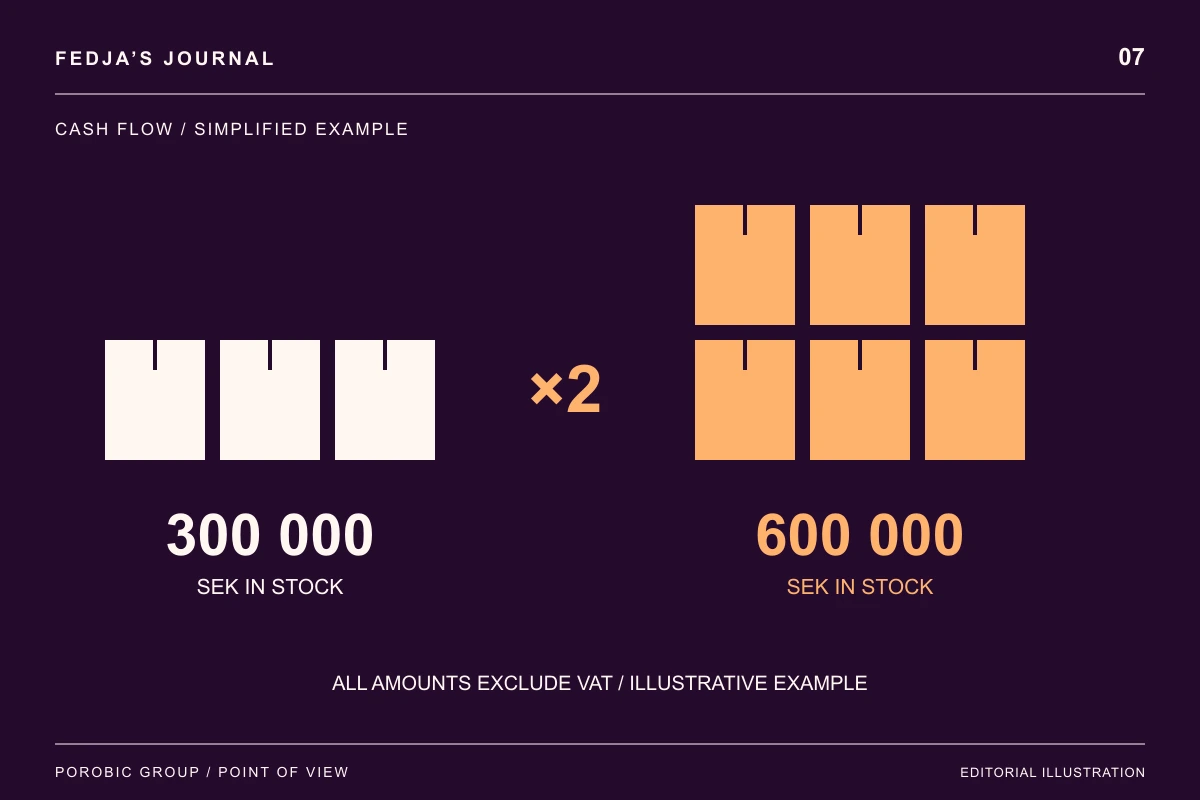
We start with 1,000 products sold per month. Each costs SEK 100 to buy, and you hold roughly three months of sales in stock. All amounts in this example exclude VAT. The inventory therefore represents SEK 300,000 at purchase cost.
Now you double sales to 2,000 products a month. With the same purchase price and stock cover, the inventory represents SEK 600,000. Another SEK 300,000 has to be tied up in goods. So the sales target comes with another demand on your cash. It rarely appears in the photo of the team celebrating.
The supplier may want payment before the customer pays.
Inventory requirements and cash outflows do not happen at precisely the same moment. Existing stock, lead times and payment terms determine when the money actually leaves the account. But if a large share has to be paid before the sales happen, growth can require a substantial advance from the company.
That is why I want a timeline next to the sales plan. When must we order? When do we pay? When do the goods arrive? When can customers buy them, and when do we get the money? Beautiful annual averages are little comfort when the supplier wants paying on Thursday.
A 20 per cent discount removes SEK 50 from gross profit.
The same product sells for SEK 250 and costs SEK 100 to buy. The difference is SEK 150 per product. That is the simplified gross profit in our example. Shipping, advertising, staff and other expenses still have to come out of it. We have not calculated the company’s profit.
A 20 per cent discount makes the selling price SEK 200. Purchase cost stays at SEK 100. That leaves SEK 100 in gross profit, SEK 50 less per product. Money comes in, but each sale leaves less room for the remaining costs. The discount therefore needs assessing both as a liquidity measure and as an economic decision.
The next stock order should ideally avoid becoming an emergency.
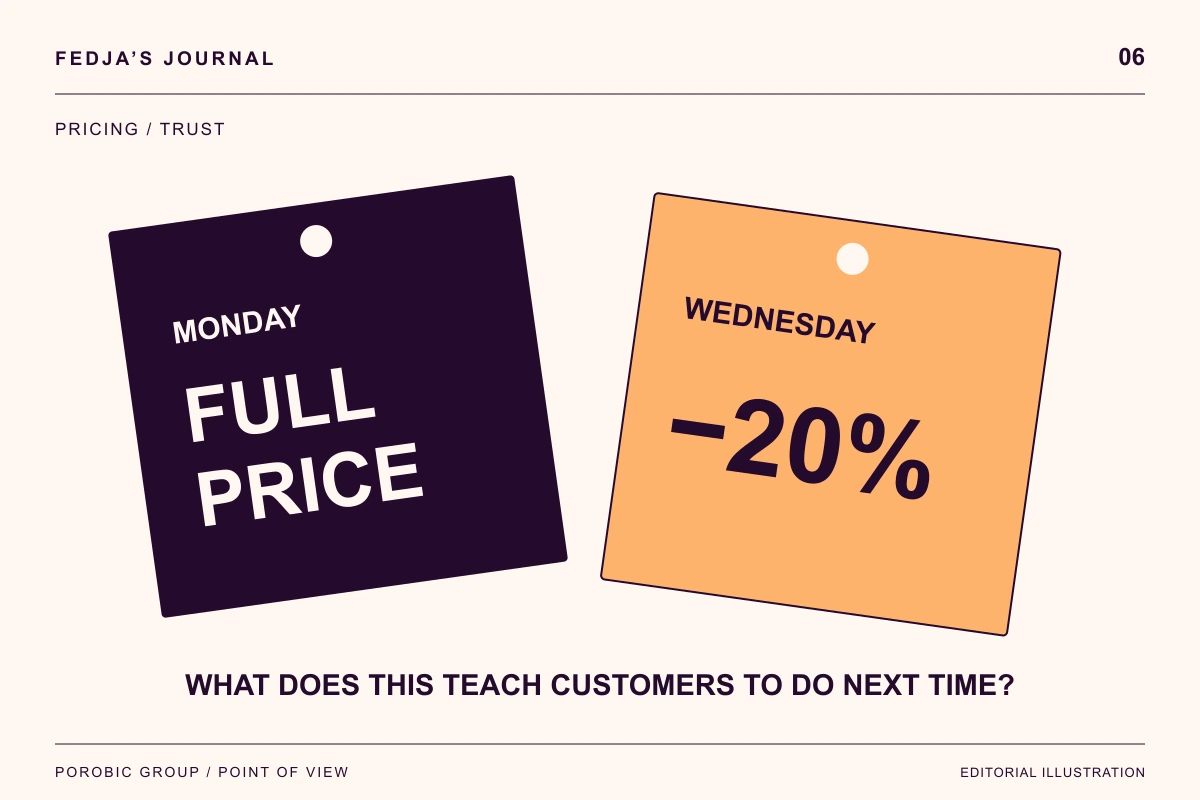
A discount can make sense to release cash from slow-moving goods. But if the next regular stock order requires another campaign, I want to pause campaign planning for a moment. We need to understand why the company has started financing purchases by giving away more margin.
Are we buying the wrong products? Excessive volumes? Tying up money in a slow range while the bestseller is unavailable? Did the plan assume better margins or faster payments than we actually get? Those questions can lead to very different actions from writing another discount code.
Bring these questions to the next stock order.
Take the actual order and put the payments next to the sales plan. Run the numbers for slower sales too. I want answers to these questions before the purchase order goes out:
- What sales assumption supports the volume, and what does a more cautious outcome look like?
- How much capital is tied up, and which other payments coincide with the purchase?
- What do the products leave after discounts and other relevant costs?
- Which payment terms and deliveries can we actually plan around?
I want to be able to pay for the next step in growth.
Marketing creates demand that purchasing has to meet. When those decisions happen separately, it is easy to send a surprise to the person managing the cash. The inventory plan therefore belongs in the same forecast as sales.
I would like the company to finance the next batch of goods with money it has generated and planned for. If external finance is needed, we should have decided that before ordering. Selling more and then asking for money for every new delivery is a fairly demanding form of success.

Fedja Porobic
Founder of Porobic Group. I write about advertising, ecommerce and the decisions that determine whether a business makes money.
Meet the Porobic Group team