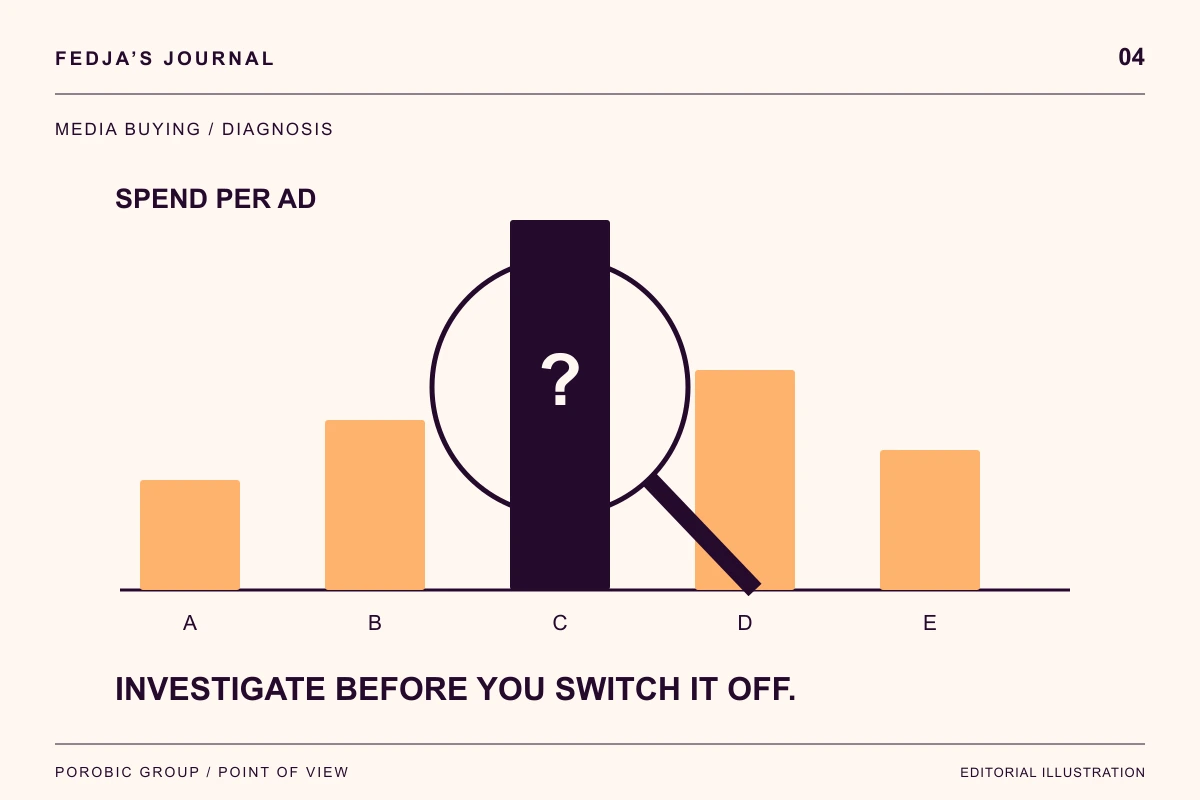
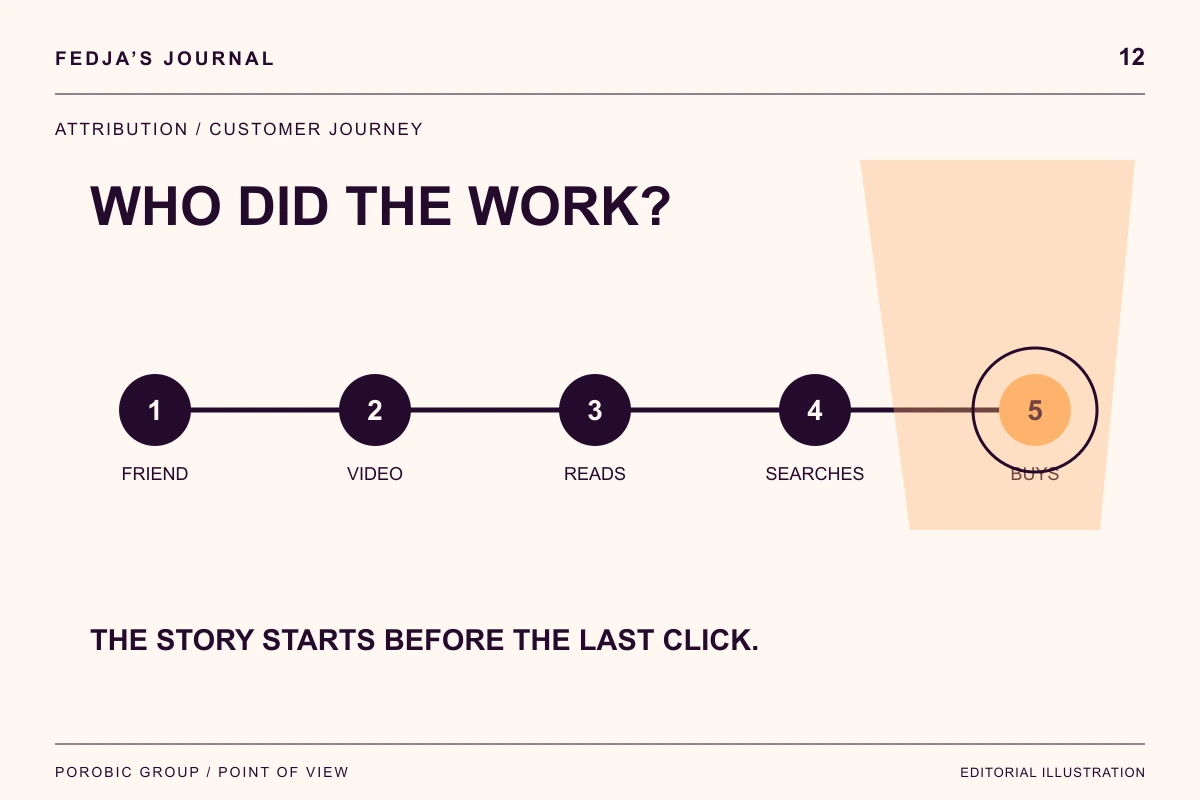
You pay for the clicks. Who decides what the customer sees next?
You can approve the ad and still have a lousy grasp of the route to checkout. That is an expensive place to get a surprise.
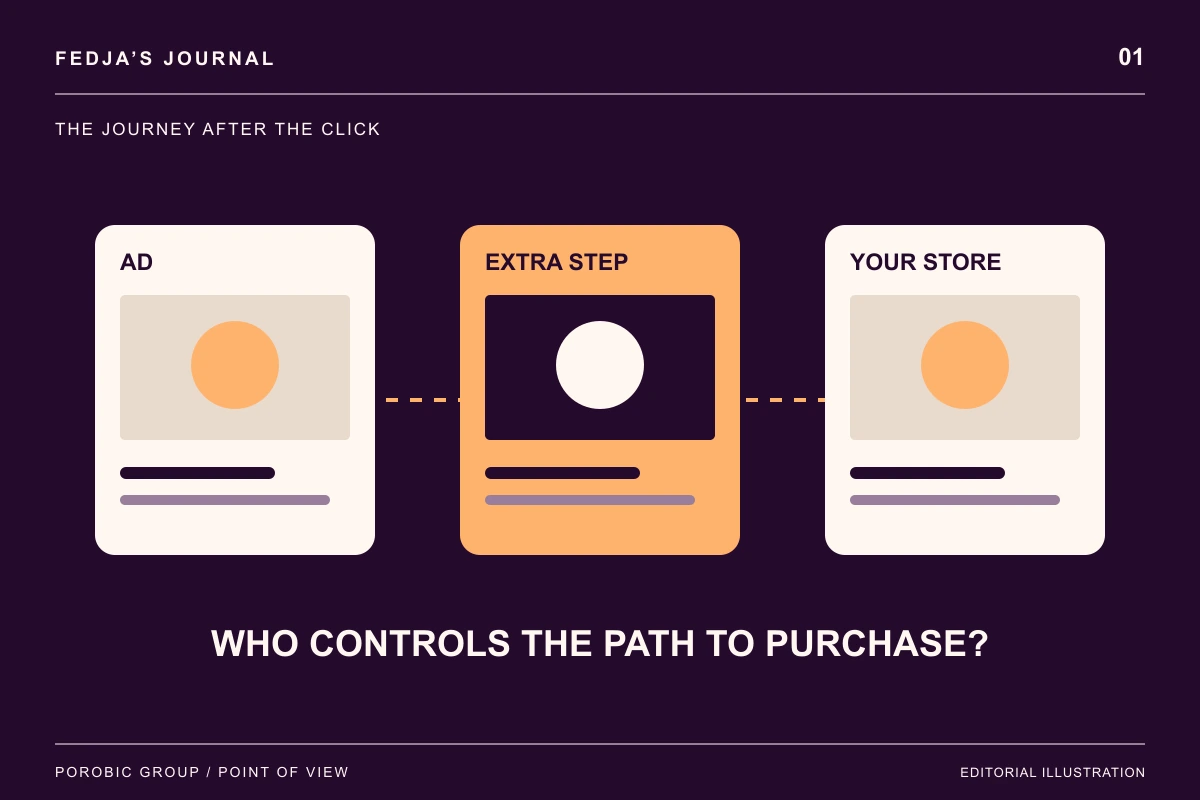
You can spend months on the offer and landing page, then buy traffic for a journey nobody on the team has tried. Product Browsing on Meta makes that risk concrete: the customer may see a product view inside the platform before reaching your site. I want to see what she encounters before the feature gets access to the campaign budget. That seems a reasonable thing to ask in return for our money.
After the click is where it gets interesting
Imagine a company preparing for Black Week. The ad shows a bundle and the landing page explains the contents. The team has approved both. In this hypothetical example, everything looks ready.
But between those two parts, the customer encounters a product view inside Facebook or Instagram. Nobody on the team has checked it. The ad’s image and copy may look exactly as before, so it is perfectly possible to approve the creative and miss a piece of the experience.
My observation on 30 October 2026
Product Browsing can show product information and catalogue recommendations inside Meta’s platforms before the customer reaches the website. That changes a part of the journey we can easily take for granted. The customer may have more things to choose from before reaching the offer we built the campaign around.
Availability, activation and interfaces can vary between accounts, ads and dates. That does not mean it is automatically enabled for every ad. Check the current destination and creative settings of your own ad. Advantage+ creative and Destination are relevant names to look for in the interface illustrated, although locations and names can change.
The catalogue suddenly has a bigger role in the experience
Does the product view show the campaign bundle, with the right price and information? Or does the customer get recommendations that pull her attention elsewhere? I want that sorted before launch. The catalogue has become part of the sales work and needs to be reviewed accordingly.
I would go through the journey with someone who did not build the campaign. Ask her to describe what the offer seems to be and what she expects to happen next. If understanding the experience requires our internal explanation, we have something to investigate before spending more money on it.
Black Week is an expensive place to guess
I am happy to test new things. But the whole of Black Week hardly needs to be the test budget. Give the feature a limited setup where the offer, objective and main conditions can be compared. Decide how much the question is worth investigating before curiosity gets free access to the ad account.
Write down what you believe before starting. Should the product view make choosing easier, or could it complicate a clear offer? Decide what you need to see to assess that. A handful of purchases is hardly enough to declare the feature a success.
A good platform result has to meet real purchases
Follow the whole journey: visits, purchases, cost per purchase and the economics of the orders. If more people choose products other than the campaign bundle, order value and margin can change too. Look at what you actually sold, including the costs that come with those sales.
Try to keep other major changes under control. A new offer, a budget increase and new creatives at once make the result difficult to read. If several things have to change, record what you do and why. Otherwise we soon have a new outcome and five different stories about what caused it.
My check before the next budget increase
Go through the ads that will receive budget and follow the route after the click. Someone on the team should be able to show what the customer encounters. That review belongs before the budget increase. Starting the search for an unfamiliar product view at the follow-up meeting is an unnecessarily expensive way to work.
Check the affected ads again after a change and document the settings. When the results arrive, I want to trace what we actually tested. Knowing only that we switched on something new at Meta is a poor answer.
- Check the customer journey and catalogue information.
- Document which ads and settings the test includes.
- Decide the budget, comparison and follow-up in advance.
- Increase spend only when the evidence supports it.

Fedja Porobic
Founder of Porobic Group. I write about advertising, ecommerce and the decisions that determine whether a business makes money.
Meet the Porobic Group team