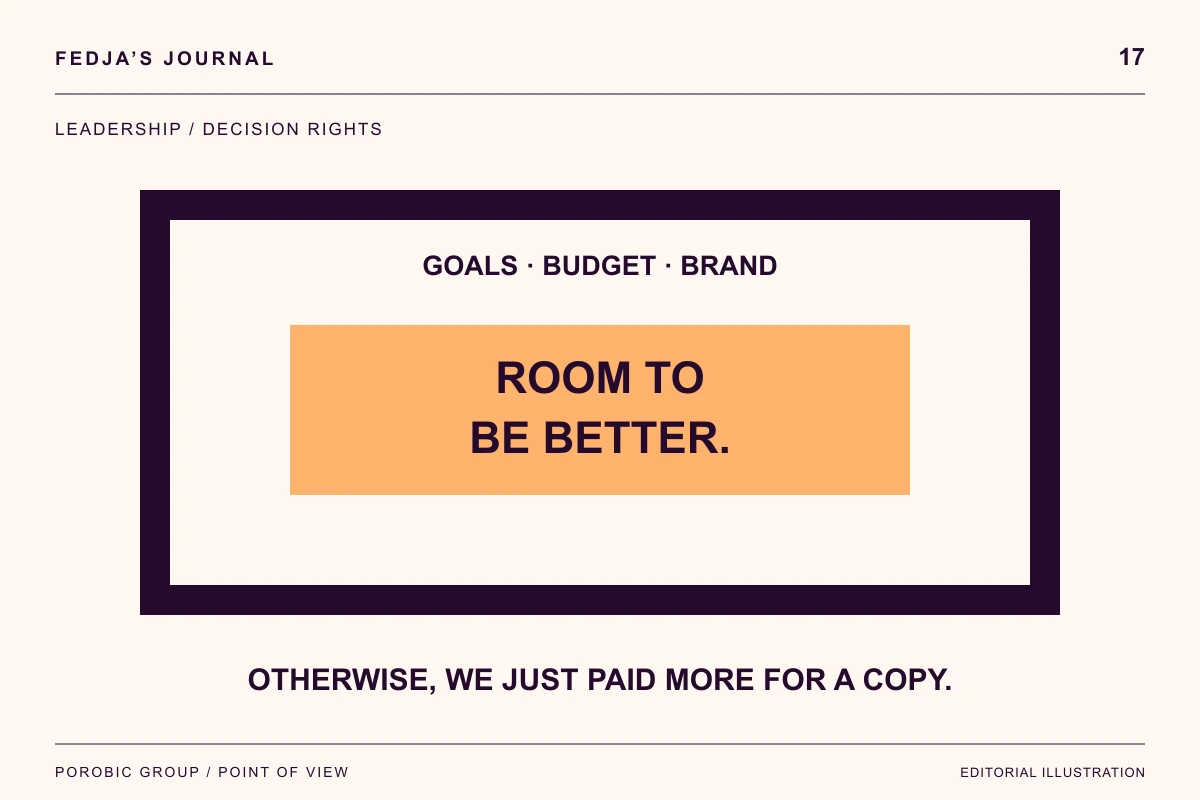
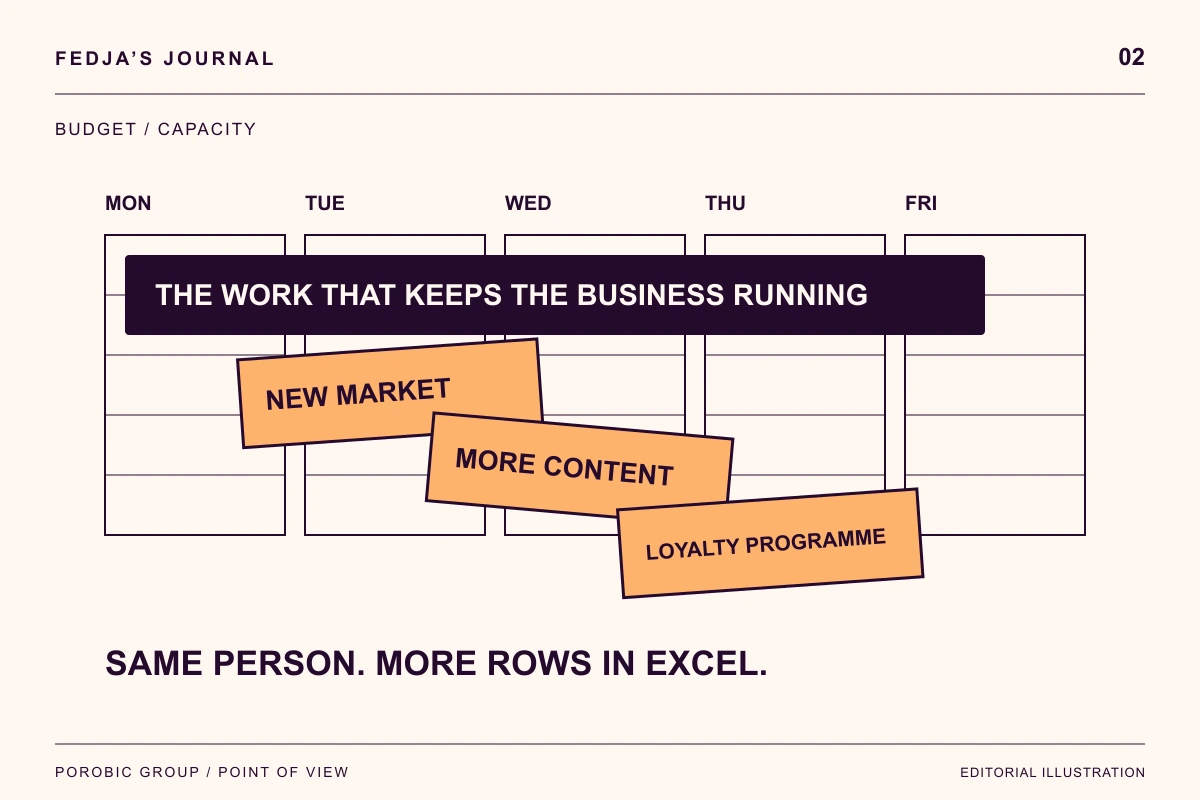
I want someone who can do the maths and still come up with a wild idea.
I want to discuss margin in the morning and a fairly unreasonable ad idea after lunch with the same person. That should not be an exotic combination.
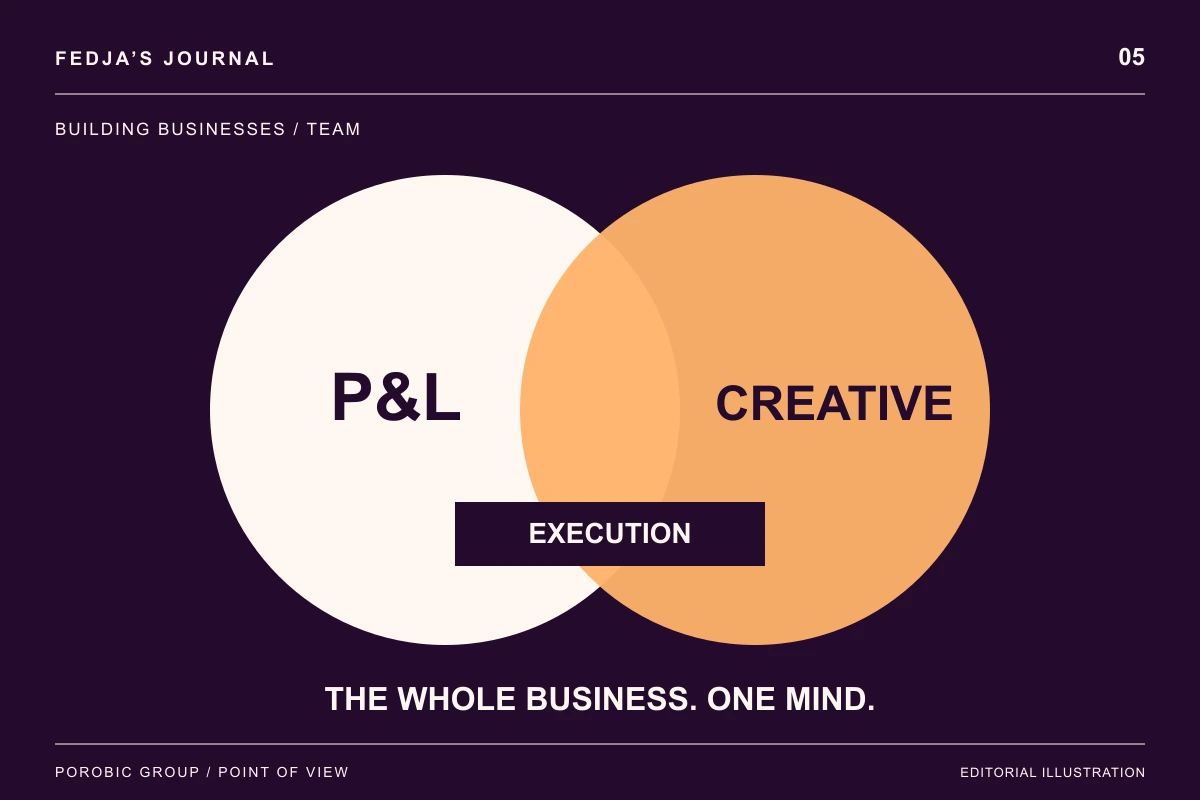
I want to build e-commerce companies with someone who can look at a sales plateau, understand the economics behind it and come up with an idea worth testing. Someone to bounce ideas off who can also tell me I am wrong. Commercial & Creative Lead is the name we give the role. I care more about how the person approaches a real problem than how impressive the title looks in an email signature.
P&L should be a working tool, not a forbidden appendix
We should be able to use a P&L when making decisions. The person in this role needs to understand what happens to margin when we change price, product mix or costs. I want to discuss a proposal without first booking someone to translate the economics for us.
Say we are considering a new product bundle. It looks good and gives the customer a reason to buy. What do the contents cost? What price works? What remains on the order? I want to know before we have produced enough material to fall in love with the idea.
Which assumptions underpin the proposal? What could make it less attractive? Asking those questions early helps us give a good idea a reasonable chance.
Find the number. Then ask a sensible question
GA and Shopify Analytics should feel like working tools. I want to ask the person to investigate a question and get a line of reasoning back. Finding the number takes us part of the way. Then someone needs to suggest what to do about it.
If a product page has a lot of traffic and weak sales, there are several things to investigate. How do visitors get there? What did the ad promise? Is the product available and clearly presented? What does the purchase journey look like? I want to hear which questions the person would start with and why.
A report shows one part of the business. Combine it with product knowledge, customer questions and a visit to the actual store. That curiosity is much more useful to me than another tidy chart.
Give the crazy idea a real problem to solve
The crazy idea is welcome to be crazy. I just want to understand why the customer would care. An unexpected opening can make a product understandable or give it a role in a new situation. That is where the idea starts to deserve a test.
This role requires being able to discuss a brief and give useful feedback. Say what needs to be clearer in the message, which problem the ad should address and what we want to learn. That gives the people making the material something better to work with than a vague feeling.
One person is hardly going to be the best at strategy, analysis, filming, editing and every channel. Breadth should help us keep the work together and collaborate with specialists. The team needs to improve even when someone else knows a particular part better.
Feel free to tell me I am wrong. Bring a better suggestion
I want to hear someone say she thinks we should do it differently. That is fairly central to having someone to bounce ideas off. If I already have all the right answers, we can hardly justify much value from another person who nods.
But disagreeing becomes useful when it comes with reasoning of its own. What do you see that I am missing? Which alternative do you propose? What could we test to learn more? I appreciate a clear position that can also change when we get new information.
A little humour helps when the pace is high and an idea did not turn out as planned. We should be able to discuss the work directly without every objection becoming a question of who was right. The company benefits more from progress than from someone winning the meeting.
Show how you think when something has to happen
I would rather discuss a limited, anonymised problem than hear a long list of tools the person has used. Give enough information for a reasoned discussion and ask which decisions she would want to make, what is missing and how she would get the first step done.
Let the conversation cover priorities, questions and a possible test. That lets us see how the person connects the business with the customer experience and creative work. And whether she notices the information gap before starting to sound certain.
I am looking for someone who can move the discussion forward after the meeting ends. If we have found an interesting idea, the person should help us run the numbers and get the first test done. That is where a lot of the role’s value is decided.

Fedja Porobic
Founder of Porobic Group. I write about advertising, ecommerce and the decisions that determine whether a business makes money.
Meet the Porobic Group team