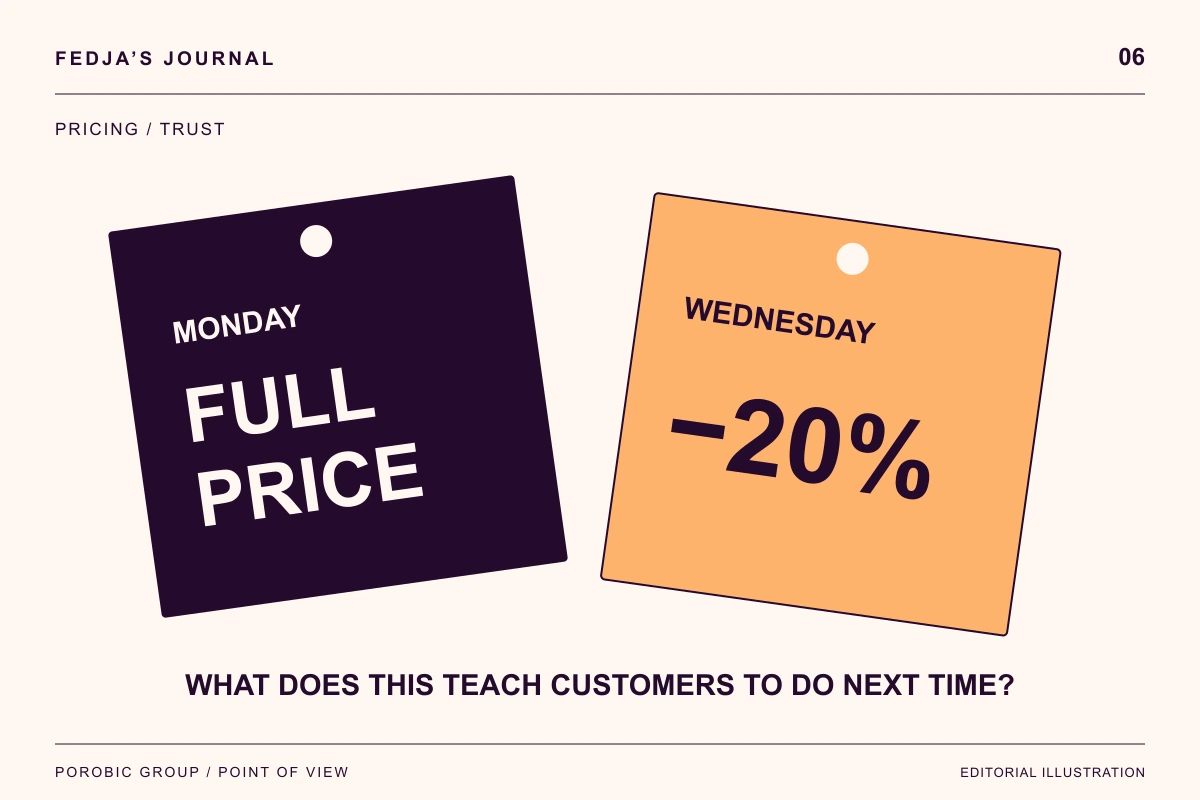
Why does someone who has never bought from you get your best deal?
Five purchases, a recommendation to a friend and worse terms than someone who has never heard of you. Strange way to build loyalty.
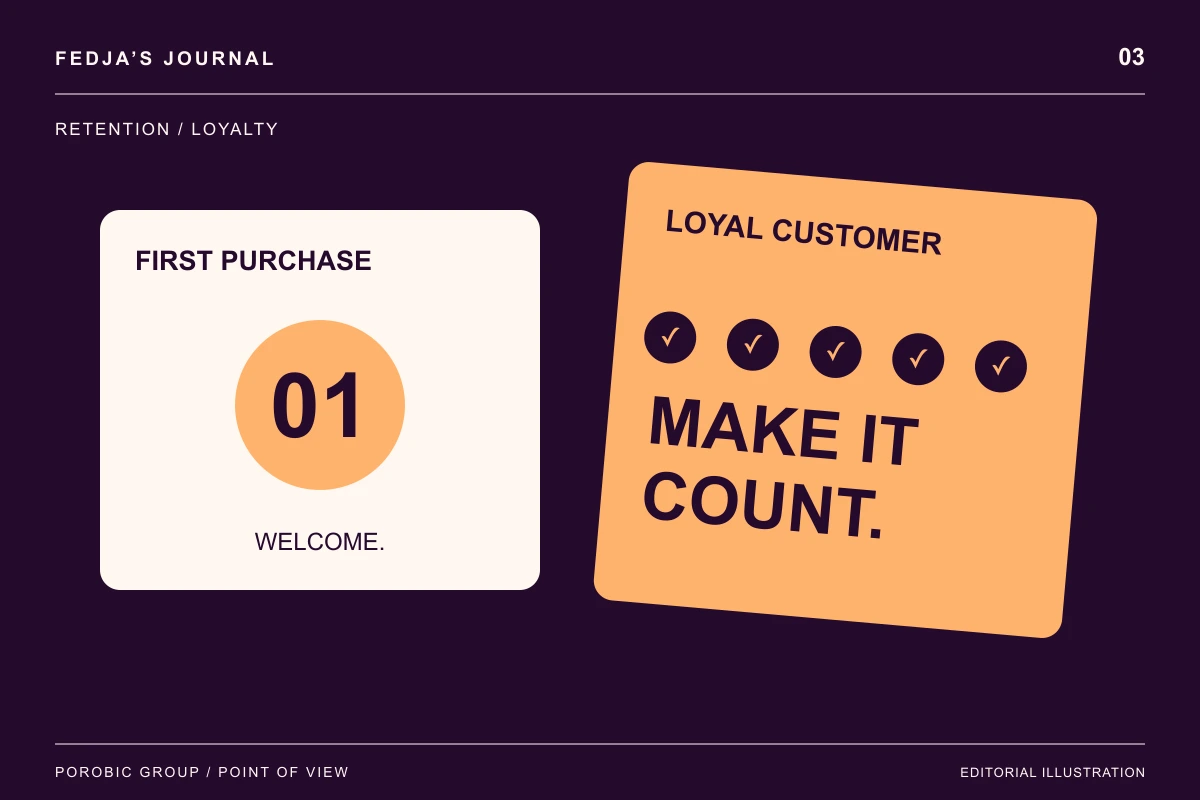
Before Black Week, we put a lot of thought into what a new customer can cost. I want as much thought given to the person who has already chosen us five times. In companies where I have a say, I want us to be most generous to our loyal customers. It should show in the offer. Being called important at a strategy meeting does very little for the customer.
Put yourself in the customer’s shoes and try the code
Imagine opening an email from a brand you like. Our best offer of the year, it says. You start choosing products and discover that the extra benefit applies only to a first purchase. Thanks for those five previous orders, I suppose.
The company may have a clear explanation. A new customer needs a reason to try. She may know neither the product, the delivery experience nor the people behind it. An introductory offer can help. At the same time, the existing customer sees a message about how her relationship with the brand is valued.
Have someone on the team go through the entire campaign as a returning customer. Read the email, follow the link, try the code and check the terms. Leave the internal explanations in the meeting room. The experience has to hold up for someone who has never seen our campaign plan.
Our imagination can stretch beyond another discount code
The customer who has chosen us several times should get a benefit she actually wants. Another discount on everything is just one possible answer. Calling something exclusive is much easier than making it worth her time.
Early access can matter when the customer wants to secure a particular product. Someone who already has the starter kit might prefer a refill. Those are approaches to try based on what customers buy and ask about. The same code with a personal name hardly solves the task.
I would start with the benefit and try to explain it in one sentence. If it sounds attractive only after we have explained the entire construction of the loyalty programme, we need to keep working.
Early access should feel like an advantage all the way through
If we offer earlier access, the experience needs to hold together. The customer needs to understand when she can enter, what she can access and what happens when the wider campaign opens. The email, page and customer service team need to give the same answer.
I would also think through the awkward edge cases. What if the customer has just bought? If her product sells out before early access? If she sees a different offer in an ad? We cannot anticipate everything, but we can decide which principles we will stick to.
One concrete approach is a short internal walkthrough before launch. Describe which customers the benefit applies to, why it exists and how the team should help when someone is unsure. Delivering a clear idea is easier than improvising through lots of different interpretations.
The best deal still needs to add up
I still want to see the calculation. The benefit has a cost, whether it is a discount, an extra product or earlier access to limited stock. The question is what it does for the customer and what the economics of the order allow.
Here I would follow what we sell, the margin on those sales and the costs the offer brings. If we compare different approaches, we also need to understand which customers received what. A group with many returning high spenders can look strong for reasons other than the campaign design.
A strong sales day makes me curious about what happens next. Which customers return? How do their purchases develop, and what do they say about the experience? If we want to build loyalty, we need to stay interested after the campaign’s beautiful sales chart has left the screen.
Give existing customers a place of their own in the plan
Put someone in charge of the offer for returning customers. Otherwise an entire campaign meeting can revolve around acquisition, with loyal customers remembered after the time has run out. That sits badly with all the talk about community.
Ask the team to describe how a loyal customer will notice the difference. If the answer needs a long presentation, I would simplify the offer. The benefit should make sense in an email or on a page to someone who has better things to do than study our campaign strategy.
And ask afterwards: did the customer experience what we intended? Read the questions to customer service and listen to the reactions. That can give us a better basis for the next campaign than simply noting that revenue went up.

Fedja Porobic
Founder of Porobic Group. I write about advertising, ecommerce and the decisions that determine whether a business makes money.
Meet the Porobic Group team