
A good product can be a very difficult business.
A niche can look large until you subtract the people who do not need the product, do not understand it or have already bought it.
ORIGINAL EPISODE: Nästa resa börjar här: nischad e-handel, Twist Boxes & PR-hacket som kostar noll kronor (Avsnitt 102) · · Audio in Swedish
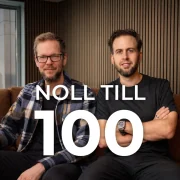
Fredrik Ankarsköld steps out from behind the podcast camera to talk about Core by D, his niche e-commerce business in horse training. I compare it with Twistboxes. Both give us reason to examine how customers understand an unfamiliar product and how acquisition can pay off when the next purchase may be a long way away. That is the business discussion from episode 102 I develop here.
Calculate the need, as well as the size of the category.
Saying you sell to equestrian customers is one thing. Selling a particular training aid within equestrian sport, where the customer also needs to understand why it matters, is another. Fredrik and I discuss that distinction in the episode.
The number of people in a category is not the number ready to buy. Some already feel a need; others need to learn something first. For some, the price makes it a bigger decision. Those differences affect the content and how far customers have to travel before purchasing.
That is why I want to examine the niche before getting excited about its potential. What are we actually asking the person to do? Understand a new problem? Change a familiar way of working? Choose a more expensive product? The market becomes more concrete when we discuss the actual decision.
Listen at this point · 20:51Your own offer needs enough focus to deserve the effort.
Fredrik explains that the business had included several activities and products, and how they cut back to concentrate on a design of their own. That is his journey with Core by D. It raises a relevant question: how many different businesses are you trying to run at once?
Every product can bring purchasing, support, quality issues and supplier relationships. A broader range can look good on a screen while making operations fragmented behind the scenes. Choosing what to remove can create room to understand and improve what you want the company to be built on.
A product of your own does not solve everything. It does give you different things to work with from an offer anyone can buy in and resell. Materials, use, design and customer experience can become part of a real advantage. That advantage then needs explaining.
Listen at this point · 10:49You may have to find the next customer from scratch.
Some products naturally generate repeat purchases. Others are bought rarely. We discuss that difference using Twistboxes: a roof box is a bigger decision, requires research and is hardly something you buy again every month.
The first purchase therefore needs to carry more of the acquisition cost. Calculate how much you can pay for a customer without assuming a repeat purchase the product is unlikely to get. Then assess what room the margin and order value provide.
The relationship after purchase still matters. Recommendations and experiences from people using the product can reassure the next buyer. But building that willingness to recommend takes work. A satisfied customer does not automatically become a ready-made distribution system because we happen to need one.
Listen at this point · 31:35A new product creates new questions. Answer them.
A roof box that rolls up creates questions that may not arise with a familiar alternative. Is it durable? How does it work on the car? What happens when it rains? That is the kind of hesitation we discuss. An innovative product can attract attention and create an explanation job at the same time.
I want creative work to start there. What must the person understand to even consider buying? What do we need to show, and what evidence makes the answer credible? Claiming that the product is fantastic does not replace that examination.
For more expensive products that need more explanation, customers may need several parts of the story. The ad should catch interest, but the content and page need to help the person continue their research. Education becomes part of selling, rather than something we hope the customer will arrange alone.
Listen at this point · 32:38The same product can begin with different stories.
In discussing Twistboxes, I describe different situations where the product can matter. A family with children and a fully packed car may start with a different question from a surfer or someone going skiing. The product is the same; the reason to care may differ.
That affects copy and images. What is cramped, awkward or impractical in that person’s everyday life? What does the customer want to make room for? The content needs the right context, rather than the same features under a new audience label in the headline.
We also discuss the complexity behind it. More markets require more than translated text. Payment, shipping, content and quality assurance have to follow. The more versions you want to manage, the more important it is to have a structure the team can operate. An idea for several landing pages is the start of the work.
Listen at this point · 48:20Credibility needs more than our own say-so.
Fredrik describes working with trainers and people who know the field. Those relationships can place the product in a different context from the company’s own ads. We also discuss the difficulty of scaling: someone needs to find the right people, make contact and do the necessary work.
PR comes up as a way to have the story examined and told beyond the company’s site. Publication or sales are not guaranteed, and the time needed to prepare relevant material must be counted. Choose a setting where the product is interesting and make its contribution easy to understand.
For a product like this, I would write down what the customer must understand before buying and compare the current content with that list. Where is a demonstration missing? Which doubts need a test or someone with product knowledge to answer? That gives the next production a clearer brief.
Listen at this point · 35:30This article is based on the conversation and adapted for reading.